
+86-15093398255
Why is this type of activated carbon suitable for dechlorination in irrigation?
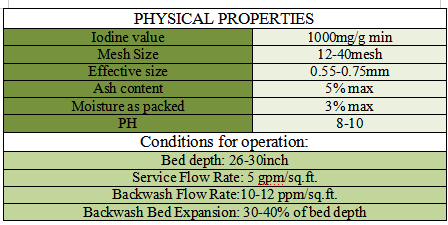
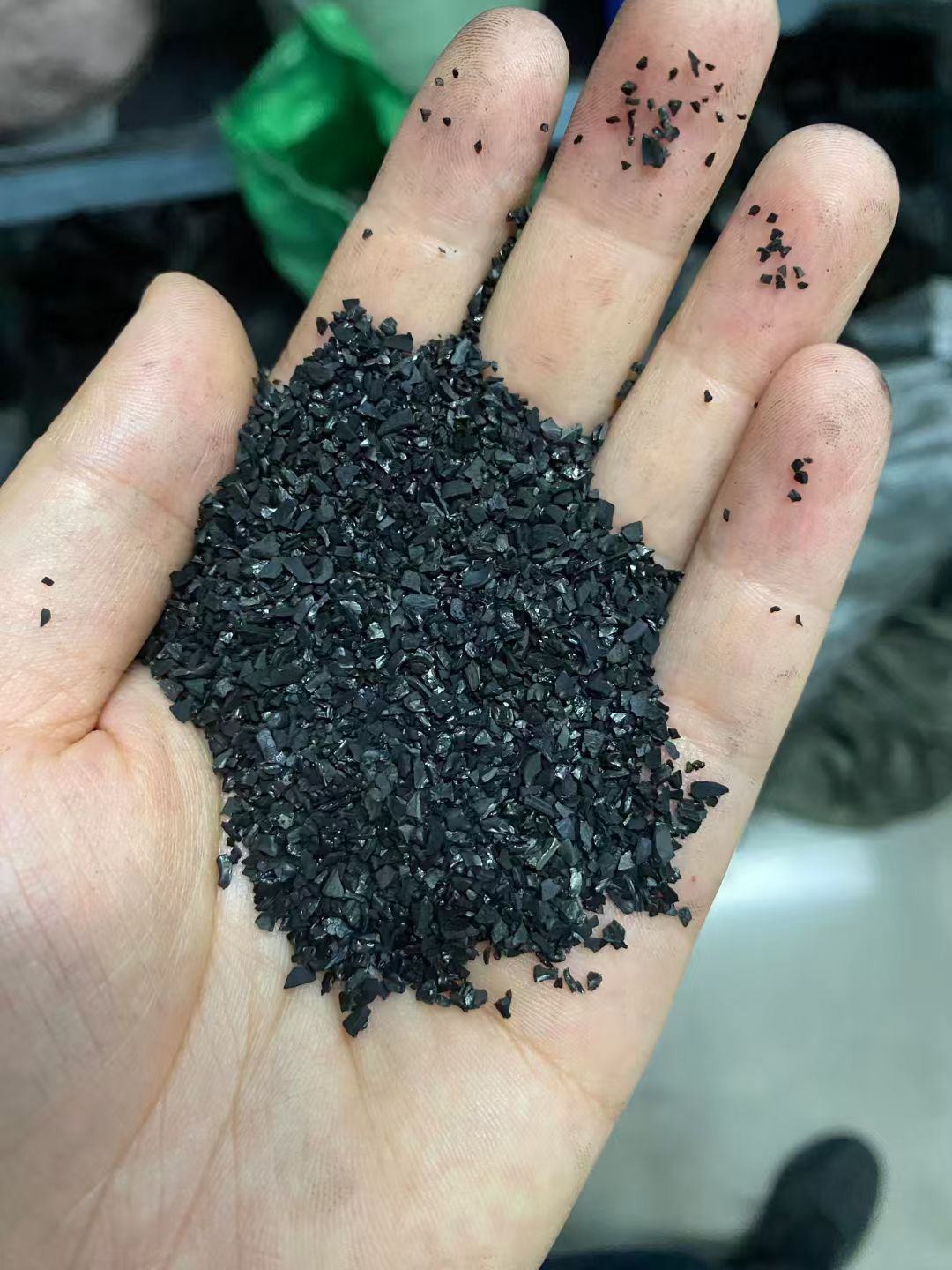
Material Advantages (Coconut Shell Activated Carbon): High hardness, not easily broken, produces less powder when washed by water, making it suitable as a filter layer. Its microporous structure has a very strong adsorption capacity for residual chlorine.
Suitable Particle Size (12×40 mesh): This particle size ensures smooth water flow while providing sufficient surface area to contact chlorine in the water, making it ideal for use in filter canisters or pre-filters in drip irrigation systems.
High Iodine Value (≥1000): Iodine value is a key indicator of adsorption capacity. ≥1000mg/g indicates high-quality activated carbon with high dechlorination efficiency and a relatively longer service life.
Specific Role in Irrigation: Although the concentration of residual chlorine in tap water or some groundwater is not high, long-term irrigation can inhibit plant roots and soil microorganisms (such as beneficial bacteria and rhizobia). Pre-filtration with activated carbon can achieve the following:
Protecting Roots: Preventing direct damage to root tip cells from chlorine, especially effective for hydroponic plants, seedlings, orchids, strawberries, and other chlorine-sensitive plants.
Maintaining Soil Ecology: Reducing damage to earthworms, beneficial bacteria, and fungi, keeping the soil vibrant.
Usage Recommendations and Reminders
Filling Method: It is recommended to fill the filter into a stainless steel or plastic tank, allowing water to flow from bottom to top or top to bottom through the activated carbon layer. A flow rate of 4-10 liters of water per minute per liter of activated carbon is recommended for best results.
Pretreatment: Rinse with clean water for 1-2 minutes before use to remove carbon powder generated during transportation (too much fine powder may clog the drip emitter).
Replacement Cycle: Chlorine removal is a chemical adsorption process with a relatively short lifespan. Typically, it treats 2000-5000 liters of water per kilogram of activated carbon (depending on the influent chlorine concentration). Generally, it should be replaced every 3-6 months. Alternatively, it can continue to be used if the residual chlorine in the effluent is <0.1 mg/L using a DPD residual chlorine test kit; otherwise, it needs to be replaced.
Cannot Remove Chloramine: If the local tap water uses chloramine disinfection, ordinary activated carbon will have poor removal efficiency and requires catalytic activated carbon.
Recommended Activated Carbon Dosage:
The recommended residence time (empty bed contact time) for activated carbon in irrigation dechlorination is 1–2 minutes.
At a moderate flow rate: 1 liter of activated carbon can treat approximately 300–500 liters of water (for tap water with residual chlorine of 0.5–1.0 mg/L).
Conservative Design: Use 1 liter of activated carbon per 300 liters of water treated.
100 liters per day → 1000 liters treated in 10 days → Approximately 3.3 liters of activated carbon are needed (can be filled in 3-liter containers).
Converted to weight: Coconut shell charcoal has a bulk density of approximately 0.45–0.55 g/mL, i.e., 1 liter ≈ 0.5 kg
→ 3 liters ≈ 1.5 kg of activated carbon
Replacement Cycle Estimation: The adsorption capacity of high-iodine-value charcoal (≥1000) for residual chlorine is approximately: 5–10 grams of residual chlorine per kilogram of charcoal (before saturation).
Common residual chlorine levels in tap water: 0.5 mg/L → 0.0005 g chlorine per liter of water.
If 1 kg of activated carbon adsorbs 8 g chlorine, the treated water volume = 8 ÷ 0.0005 = 16,000 liters.
However, in practice, when the residual chlorine removal rate drops to a certain level (e.g., effluent chlorine > 0.1 mg/L), it needs to be replaced. The safe treatment period is usually calculated based on 20-30% of the theoretical lifespan:
Effective treated water volume ≈ 16,000 liters × 25% = 4,000 liters/kg activated carbon
If you fill 1.5 kg → Effective treated water volume = 1.5 × 4000 = 6,000 liters
Using 100 liters per day → 6,000 ÷ 100 = 60 days (approximately 2 months)
Therefore, the example result is:
Filling volume: 1.5 kg (approximately 3 liters)
Replacement cycle: Replace every 2 months, or until the treatment is complete. Replace after 6000 liters of water